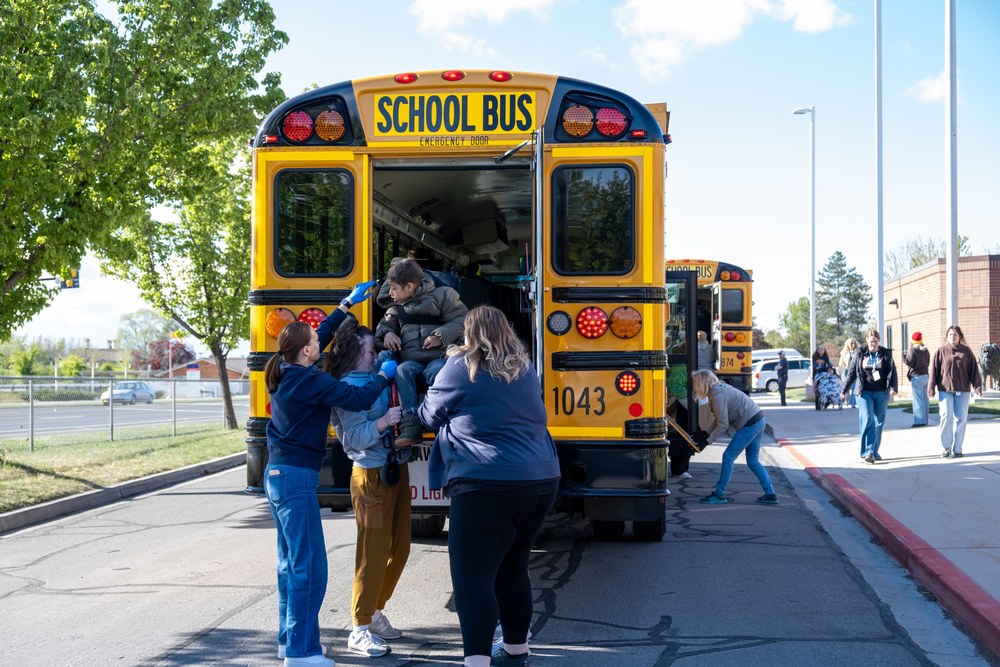
When the routine changes, preparation is what keeps students safe. Practice is how Alpine School District turns plans into protection. On Friday, April 17, Dan Peterson School, one of Alpine School District’s specialized campuses, conducted its twice-yearly emergency bus evacuation drill, reinforcing how consistent practice strengthens safety systems across the district.
While every school in Alpine participates in these drills, the process at Dan Peterson requires a higher level of staff involvement to support approximately 90 students across 12 buses. Students exited through emergency back doors, relying on staff to assist with mobility needs, including lowering wheelchairs safely from buses without the assistance of hydraulics or ramps.
Led by Principal Ryan Hemming, the exercise tested coordination, communication, and new variables like bus positioning. The school cleared four buses by 9:17 a.m., improving by 13 minutes over the typical 9:30 timeline.
“Well, I think one of the first things is probably the amount of trust that the students need to have in the staff,” Hemming said. “Because we do something one way every single day and then twice during the year, all of a sudden we’re doing it differently.” For students with disabilities who rely on routine, these moments of change require strong relationships and confidence in the adults guiding them. That trust is foundational to making any system effective.
At Alpine School District, drills are more than compliance, they are a structured process of practice, evaluation, reflection, and improvement. At Dan Peterson, staff members take on specialized roles such as lifters, runners, and protectors to ensure students’ physical and emotional needs are met. “We really have to know some of the unique behaviors of the kids,” Hemming said. “So I think a big thing that people might just need to know is how much our relationships with these students play into this process.” This student-centered approach ensures that systems are built around individual needs.
Efficiency and clarity signal that the system is working. “If I don’t have people standing around, that means people are working and getting them on and off the buses,” said Hemming. Clearly defined roles and repeated practice allow staff to respond quickly and confidently. The improved evacuation time reflects how refining systems over time leads to better outcomes.
For bus driver Angie Thomas, preparation is rooted in repetition and teamwork. “I just think having that repetition in your mind is good and to have a plan of maybe certain circumstances that might happen,” she said. With 16 years of experience, she continues to refine her approach. “I try to improve the order of things…to make sure I know how it’s going to roll.” Her perspective reflects a districtwide mindset of continuous improvement.
The drill also revealed opportunities to strengthen the system. These moments of reflection are essential to improving future responses.
For families across Alpine School District, the purpose is clear. “Their kids are number one priority for us and we want them to be safe,” Thomas said. “We love our students.” Through intentional practice and ongoing refinement, schools like Dan Peterson demonstrate how strong systems—grounded in relationships—help Alpine School District stay ready for whatever comes next.